
The Exposure Memory Problem in Long Latency Occupational Hazards

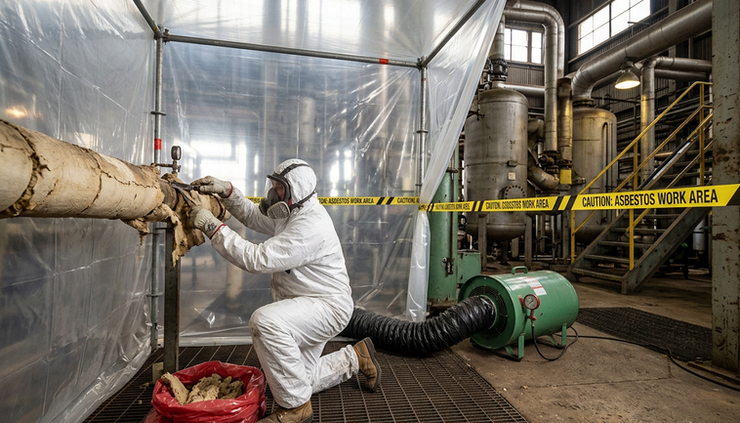
Some occupational hazards injure people immediately. A dropped load, an arc flash, a fall from height, or an uncontrolled release leaves little doubt that something has gone wrong. Other hazards work on a different clock. Asbestos fibers, respirable crystalline silica, diesel exhaust, welding fume, excessive noise, vibration, isocyanates, beryllium, certain solvents, and process carcinogens may leave no visible trace at the end of a shift.
Years later, the worker develops mesothelioma, silicosis, occupational asthma, hand-arm vibration syndrome, hearing loss, or cancer. By then, the project has closed, the contractor has changed names, the supervisor has retired, the exposure monitoring file is missing, and the worker’s job history sits in fragments across employers, countries, and medical providers.
That is the exposure memory problem.
Long-latency occupational disease is not just a medical issue. It is a data integrity, governance, contracting, leadership, and ethics issue. Organizations in high-risk industries can manage many acute risks with permits, isolations, inspections, and frontline supervision. Long-latency risks require something harder: the ability to remember exposures accurately across decades.
This article is informational and does not replace occupational medical, legal, or regulatory advice.
Why Long Latency Hazards Challenge Conventional HSE Systems
Most HSE management systems are better at remembering events than exposures. Incident databases capture injuries, spills, dropped objects, near misses, and deviations. Audit systems track findings and corrective actions. Permit systems record work authorization. These tools matter, but they often do not preserve a lifetime exposure history.
Long-latency hazards demand a different model of evidence.
A worker may have a normal lung function test today after years of silica exposure. A noise survey may show one task above acceptable levels, but no one links it to the worker’s cumulative dose across multiple projects. A welder may rotate between stainless steel, confined space work, galvanized materials, and fume-generating rework, while exposure records remain task-based rather than person-linked.
The challenge is that disease risk often depends on several variables:
The substance or physical agent involved
Exposure intensity
Exposure duration
Frequency and cumulative dose
Route of exposure
Control effectiveness over time
Individual susceptibility
Co-exposures, such as smoking and asbestos, or solvents and noise
Latency period and disease mechanism
Occupational hygiene programs often measure the first few variables. Occupational medicine may see the health outcome. Operations may hold the job history. Contractors may hold the payroll and deployment data. HSE may hold the risk assessment. Procurement may hold the contract requirements. No single function sees the full story unless the organization designs for it.
Established Evidence Is Clear About the Risk
The evidence base for many long-latency hazards is mature.
The International Agency for Research on Cancer classifies asbestos, respirable crystalline silica, diesel engine exhaust, benzene, certain chromium compounds, and some welding-related exposures as carcinogenic or associated with serious disease outcomes. NIOSH, OSHA, and the UK Health and Safety Executive provide substantial technical guidance on exposure control, medical surveillance, and recordkeeping for these agents.
Noise-induced hearing loss is well established as a cumulative and irreversible occupational condition. NIOSH and OSHA both address occupational noise through exposure limits, hearing conservation programs, audiometric testing, and control measures. Hand-arm vibration is associated with vascular, neurological, and musculoskeletal effects. Sensitizing agents such as isocyanates, epoxy components, metalworking fluids, latex proteins, and some wood dusts can trigger occupational asthma or dermatitis, sometimes after a period of apparently uneventful exposure.
The professional interpretation is equally clear. If an organization cannot reconstruct who was exposed, to what, when, where, and under what controls, it cannot reliably manage occupational health risk over the long term.
It also cannot confidently defend its decisions, improve its controls, support affected workers, or learn from patterns that emerge across projects and assets.
What Gets Forgotten And Why It Matters
The exposure memory problem is rarely caused by one bad database. It grows from normal business activity.
Projects mobilize and demobilize. Contractors win and lose work. Assets change ownership. Maintenance strategies shift. Industrial processes evolve. Records migrate between software systems. Retention schedules focus on commercial documents rather than health evidence. Workers move where the work is.
In construction, mining, energy, utilities, and marine operations, this fragmentation is routine.
A pipefitter may spend three months on a turnaround involving asbestos-containing gaskets, six months on a fabrication yard with high welding fume, a year on a tunnel project with silica-generating cutting, then move offshore where noise, vibration, solvents, and diesel exhaust dominate the exposure profile. Each employer may hold a partial record. Each site may have used different sampling methods, PPE assumptions, and health surveillance arrangements.
Years later, the worker’s physician asks a simple question: What were you exposed to?
The honest answer may be: nobody knows in enough detail.
The Record Types That Matter
Long-latency risk management depends on records that connect the worker, the job, the task, the agent, the control environment, and the medical surveillance pathway.
Useful exposure memory usually includes:
Job and task history
Role, department, project, location, dates, shift patterns, and major tasks performed.
Agent inventory
Substances, materials, byproducts, physical hazards, and known or suspected carcinogens, sensitizers, ototoxic agents, and fibrogenic dusts.
Exposure monitoring data
Personal sampling, area sampling, real-time monitoring, noise dosimetry, vibration assessments, and biological monitoring where appropriate.
Control information
Engineering controls, local exhaust ventilation, wet methods, isolation, enclosure, respiratory protection, hearing protection, glove selection, maintenance status, and control failures.
Medical surveillance data
Fitness-for-work outcomes, spirometry, audiometry, skin assessments, respiratory questionnaires, chest imaging where required, biological monitoring, and medical restrictions. Access must follow privacy and medical confidentiality requirements.
Training and competency evidence
Hazard-specific training, fit testing, respiratory protection program participation, and hearing conservation enrollment.
Exposure group assumptions
Similar exposure group definitions, task groupings, statistical decisions, and professional judgments made by competent occupational hygienists.
The most useful records are not just archived. They are structured so a competent person can interpret them later.
A folder of old PDFs may satisfy a superficial retention check, but it often fails when the organization needs to reconstruct exposure. Sampling data without worker identifiers, dates, task notes, analytical methods, or control descriptions has limited value. So does medical surveillance data that cannot be linked to the relevant exposure group.
Why Conventional HSE Systems Miss the Issue
Conventional HSE systems often focus on immediate verification. Was the permit issued? Was the respirator worn? Was the noise survey completed? Was the toolbox talk delivered?
Those questions help, but they do not prove long-term risk control.
A permit may state “respiratory protection required,” yet the historical exposure record may not show whether the selected respirator had the right assigned protection factor, whether fit testing applied to that worker, whether facial hair affected the seal, whether the cartridge matched the contaminant, or whether the contaminant was a particulate, gas, vapor, or mixed exposure.
A noise assessment may identify a high-noise area, but the long-term record may not show worker dose across shifts, overtime, adjacent tasks, temporary equipment, or combined exposure to ototoxic chemicals.
A silica control plan may specify wet cutting, but no one may record intermittent water supply failures, changes in material hardness, enclosed work conditions, or rework that moved the task outside the assessed exposure scenario.
These gaps do not always show up in audit scores. They appear years later, when the organization tries to answer a medical or legal question with records that were never designed to survive beyond the project.
The Main Long Latency Hazards That Need Exposure Memory
Each long-latency hazard has its own biology, measurement challenges, and control expectations. The common thread is that weak historical information reduces the organization’s ability to protect workers over time.
Hazard | Why Exposure Memory Matters | Common Record Weakness |
Asbestos | Disease may develop decades after exposure, including mesothelioma, lung cancer, and asbestosis. | Contractor records, abatement files, clearance data, and worker assignments are often separated. |
Respirable crystalline silica | Silicosis, lung cancer, chronic obstructive pulmonary disease, and kidney disease are recognized concerns. | Records may focus on tasks, not cumulative worker exposure across cutting, drilling, blasting, and cleanup. |
Noise | Hearing loss often develops gradually and can be missed until audiometric shifts become clear. | Audiograms may not connect to true personal dose, changing equipment, or work across multiple sites. |
Carcinogens | Many cancers have long latency and multifactorial causes. | Chemical inventories, exposure estimates, and process histories may be incomplete after asset changes. |
Sensitizing agents | Asthma or dermatitis may emerge after repeated exposure and can worsen at low levels once sensitization occurs. | Early symptoms, task triggers, and product substitutions may not be captured in a usable way. |
Vibration | Hand-arm and whole-body vibration effects build over time and depend on tool, duration, posture, and maintenance. | Tool trigger-time estimates are often rough, and contractor use may be poorly documented. |
Welding fume and metal exposure | Risks vary by metal, process, ventilation, confined space conditions, and coatings. | Exposure records may not distinguish stainless steel, galvanized work, surface contamination, or confined spaces. |
Asbestos Shows The Cost Of Poor Historical Knowledge
Asbestos remains the clearest example of how exposure memory outlives projects, companies, and careers. OSHA, NIOSH, EPA, and other authorities have extensive requirements and guidance for identifying asbestos-containing materials, controlling disturbance, training workers, and maintaining records.
The operational difficulty is not only legacy insulation or building material. It is the chain of information.
An asset owner may maintain an asbestos register. A maintenance contractor may perform the task. A specialist abatement contractor may control the removal. A laboratory may issue analytical results. A temporary labor provider may employ some workers. The medical provider may hold surveillance records. If those records do not connect, the organization may later know that asbestos work occurred, but not who had meaningful exposure.
That distinction matters.
A building survey or asbestos register is not the same as a personal exposure history. A clearance certificate is not proof that no earlier exposure occurred during disturbance. A training record is not a dose record. A negative air sample from one location may not represent a worker’s breathing zone during removal, bagging, cleanup, or waste handling.
Silica Risk Is Often Hidden In Routine Work
Respirable crystalline silica is generated in common activities: cutting concrete, drilling, grinding, crushing, tunneling, quarrying, abrasive blasting, fracking sand handling, and some foundry work. OSHA’s respirable crystalline silica standards and NIOSH guidance make clear that exposure control, assessment, and medical surveillance require structured management.
The exposure memory challenge comes from variability.
Short-duration high-exposure tasks may occur during punch-list work or unplanned rework. Crews may switch tools. Water suppression may fail. Work may move indoors. Cleanup methods may resuspend fine dust. A project may treat silica as a task hazard, while the worker experiences it as a cumulative career exposure.
If records only show that “silica controls were in place,” they may not support future health evaluation. The key is whether the organization can reconstruct the tasks, materials, controls, respiratory protection, exposure monitoring, and medical surveillance eligibility for affected workers.
Noise Records Need More Than Annual Audiograms
Noise-induced hearing loss is often treated as administratively predictable. Enroll workers in a hearing conservation program, issue hearing protection, perform audiometry, and review standard threshold shifts.
That can create false confidence.
Noise exposure changes with equipment condition, temporary generators, compressors, turbines, pile driving, blasting, vessel engine rooms, fabrication shops, and maintenance activities. Hearing protection effectiveness depends on selection, fit, compatibility, communication demands, and actual use. NIOSH has long emphasized prevention through noise control and accurate exposure assessment, rather than relying only on PPE.
Audiograms are essential, but they are lagging indicators. Exposure memory requires personal noise data, area maps, equipment inventories, changes in process noise, hearing protection fit testing where used, and records of workers moving between high-noise tasks.
This becomes more complex when workers also encounter ototoxic chemicals, such as certain solvents or metals. The science continues to develop, but NIOSH and occupational health literature recognize that combined exposures can complicate hearing conservation decisions.
Fragmented Careers Create Fragmented Exposure Histories
The modern high-risk workforce is mobile. This is especially true in construction, oil and gas, mining, marine, power generation, and large infrastructure programs.
Workers move between:
Prime contractors and subcontractors
Short shutdowns and long capital projects
Domestic and international assignments
Union hiring halls and staffing agencies
Owner-operated sites and contractor-controlled worksites
Brownfield maintenance and greenfield construction
Onshore and offshore environments
Each move can sever the exposure record.
The receiving employer often starts again with a pre-placement medical, a new training matrix, and a fresh set of certificates. The worker may carry some information, but rarely a complete exposure history. Medical privacy laws also mean that health records cannot simply flow across employers without proper consent and governance.
The result is a structural blind spot. A worker’s risk accumulates across a career, while organizational records reset at contract boundaries.
Contractors Face A Particular Exposure Memory Gap
Contractor management systems often focus on prequalification, incident rates, insurance, training, and procedure alignment. Long-latency occupational health tends to receive less attention unless a regulation or client standard makes it explicit.
A client may require contractors to conduct exposure monitoring but not specify data format, worker linkage, retention, transfer, or end-of-contract handover expectations. A contractor may perform medical surveillance but keep only fitness outcomes visible to the client. A subcontractor may use temporary labor but fail to maintain detailed task histories for each worker.
None of this is easy. Privacy, employment law, contract terms, medical confidentiality, data ownership, and cross-border requirements all matter. Still, the basic management question remains: who holds the exposure memory when the work is finished?
A mature contracting strategy defines this before mobilization.
It clarifies which records stay with the employer, which records go to the client, which records follow the worker, how medical confidentiality is protected, and how exposure data will remain usable after the contract ends.
Cross-Border Work Adds Legal And Technical Complexity
International work adds another layer. Exposure limits, medical surveillance requirements, carcinogen registers, privacy laws, and record retention rules vary by country. Monitoring methods may differ. Units, analytical laboratories, language, and job titles may not align.
For multinational organizations, this makes standardization valuable. ISO 45001 requires organizations to maintain documented information needed for the occupational health and safety management system, though it does not solve the technical design of exposure records. ISO standards on risk management and management systems can support governance, but detailed occupational hygiene competence remains essential.
The practical answer is not to force every country into one legal template. It is to maintain a minimum corporate exposure memory standard that meets or exceeds local expectations where appropriate, while allowing local legal requirements to be met.
That standard should define core data fields, retention expectations, access controls, medical confidentiality rules, and handover requirements.
A Practical Framework For Preserving Exposure Memory
The Exposure Memory Problem in Long Latency Occupational Hazards needs deliberate design. Organizations should treat exposure memory as critical risk information, similar to process safety information, asset integrity data, or engineering design basis documents.
The following framework can help.
Define The Exposure Memory Standard
Start with a written standard that explains what must be retained, for which hazards, by whom, and for how long. It should cover employees, contractors, subcontractors, temporary labor, and visiting specialist teams when their work creates material exposure risk.
At minimum, the standard should define:
Long-latency hazard categories covered by the system
Roles accountable for collecting and validating records
Minimum data fields for job, task, agent, control, monitoring, and worker linkage
Medical surveillance interface rules
Retention periods based on legal, medical, and risk requirements
Contractor handover requirements
Data quality checks
Worker access and consent processes
Controls for privacy and confidentiality
In the United States, OSHA’s access to employee exposure and medical records rule, 29 CFR 1910.1020, sets important requirements for access and retention of employee exposure and medical records. Some OSHA substance-specific standards also include detailed recordkeeping obligations. A corporate standard should be built with competent legal and occupational health advice, since the longest needed retention period may come from regulation, disease latency, litigation risk, or ethical duty.
Build Person-Linked And Task-Linked Records
Exposure memory needs both views.
A task-linked record helps the organization improve controls. It shows that concrete cutting, insulation removal, abrasive blasting, welding stainless steel, or operating a vibrating tool created exposure under defined conditions.
A person-linked record helps occupational medicine understand cumulative risk. It shows which workers performed the work, when, how often, under what controls, and with what monitoring results.
The two records should connect without exposing medical details to people who do not need them.
Good occupational hygiene practice often uses similar exposure groups. These are valuable, but they must be maintained carefully. If the group definition changes, or if task conditions vary, the record should show the basis of professional judgment.
Preserve Context, Not Just Numbers
A sampling result without context can mislead.
The record should show what was happening during the sample period. That includes materials, tools, environmental conditions, control status, PPE used, worker location, duration, abnormal events, and whether the result represents routine work, worst-case work, or a specific investigation.
For noise, keep task notes and equipment conditions. For vibration, keep tool type, trigger time assumptions, maintenance condition, and accessory details. For chemicals, keep safety data sheets, product names, ingredients where available, process temperatures, ventilation status, and byproducts.
When future occupational health professionals review the data, they need enough detail to judge whether the record is comparable to the worker’s actual exposure.
Integrate Medical Surveillance Without Breaking Confidentiality
Medical surveillance is central to long-latency hazard management, but it requires careful governance.
Employers usually need fitness outcomes, restrictions, and program participation status. Medical providers hold confidential health information. Workers need access to their own records and should understand why surveillance matters.
A sound system separates medical confidentiality from exposure accountability. It allows occupational health professionals to connect surveillance to relevant exposure groups while limiting unnecessary disclosure.
This is especially important for sensitizers. Early reporting of work-related respiratory or skin symptoms can prevent progression. If workers distrust the system, or fear job loss, symptoms may be hidden until disease becomes severe.
Make Contractor Requirements Explicit
Contract language should address exposure memory directly. Requirements should not stop at “comply with applicable law.”
Contracts for high-risk work should specify:
Hazard assessment and exposure monitoring expectations
Competence requirements for occupational hygiene work
Medical surveillance responsibilities
Record formats and required data fields
End-of-project exposure record handover
Worker access arrangements
Retention obligations after contract closure
Rules for subcontracted and temporary workers
Incident and exceedance notification requirements
Clients should avoid demanding confidential medical details they are not entitled to receive. They should require enough exposure information to understand and manage risk created by work under their control.
Audit Record Quality, Not Just Program Existence
An audit that asks whether exposure monitoring occurred may miss the real issue. A stronger audit samples a worker’s record and tests whether the organization can reconstruct exposure history.
Useful audit questions include:
Can we identify all workers assigned to a high-exposure task?
Can we link each worker to the relevant similar exposure group?
Can we find monitoring results, methods, dates, and task context?
Can we confirm what controls were in place and whether they worked?
Can we identify who required medical surveillance and whether it occurred?
Can we retrieve records from closed projects and former contractors?
Can workers access their own exposure records through a clear process?
Can we interpret records after a software migration or business acquisition?
This turns exposure memory from a paperwork exercise into an operational test.
Plan For Organizational Change
Mergers, divestments, asset sales, software replacement, and project closeout are high-risk moments for exposure memory. Records can disappear during transitions that have nothing to do with HSE performance.
Organizations should include occupational exposure records in management of change. Before a site changes ownership or a project demobilizes, leaders should confirm where long-latency exposure records will reside, who will maintain them, how workers can access them, and whether medical surveillance obligations continue.
This is not administrative housekeeping. It is long-term risk control.
Warning Signs That Exposure Memory Is Weak
Experienced HSE leaders can often detect exposure memory weakness before a disease claim or regulatory request exposes it.
Common warning signs include:
Exposure monitoring data exists only as scanned PDFs with inconsistent labels.
Contractor exposure records are not handed over at project closeout.
Medical surveillance enrollment lists do not match exposure group lists.
Noise and vibration assessments rely on outdated equipment inventories.
Silica or welding fume controls are verified during planned work, but not during rework or cleanup.
Asbestos registers exist, but personal exposure histories are incomplete.
Historical chemical inventories are missing after product substitutions.
Workers cannot obtain exposure records without informal contacts.
Industrial hygiene data is stored separately from job history and cannot be linked by worker.
Record retention schedules are driven by finance or project closeout rather than health latency.
The leadership question is simple: if a worker developed a suspected occupational disease 15 years from now, could the organization reconstruct the exposure history with confidence?
If the answer is no, the current system is creating future uncertainty.
Leadership Questions That Improve Decisions
Senior leaders do not need to become occupational hygienists. They do need to ask better questions.
Good questions include:
Which long-latency hazards could reasonably affect our workforce, including contractors?
Who owns exposure memory at corporate, site, project, and contractor levels?
Are our records person-linked, task-linked, and interpretable?
Do we retain exposure and medical records for periods that match legal duties and disease latency?
Are workers able to access their exposure records?
Do we require contractors to preserve and transfer exposure information?
Can occupational health, hygiene, operations, and HR connect their data lawfully and effectively?
What exposure information would be lost if a major contractor left tomorrow?
What records would be lost if we sold an asset, closed a project, or changed software?
How do we learn from surveillance trends without breaching confidentiality?
These questions change the tone of occupational health governance. They move the conversation from compliance activity to long-term stewardship.
Professional Takeaway
Long-latency hazards punish short organizational memory. The exposure may occur during a routine task, under a valid permit, with no immediate injury and no obvious failure. The health consequence may appear decades later, when the people, contracts, and systems have changed.
A mature HSE system preserves exposure memory across the worker’s career and the organization’s lifecycle. It links jobs, tasks, agents, controls, monitoring data, and medical surveillance in a way that remains useful, lawful, and accessible over time.
The practical standard is demanding but clear: if the organization creates or controls long-latency exposure, it must be able to remember that exposure long after the work is finished.
Professional References And Further Reading
OSHA, 29 CFR 1910.1020, Access to Employee Exposure and Medical Records.
OSHA standards and guidance on asbestos, respirable crystalline silica, occupational noise exposure, and substance-specific health hazards.
NIOSH guidance on occupational exposure assessment, hearing loss prevention, respirable crystalline silica, asbestos, carcinogens, and occupational health surveillance.
UK Health and Safety Executive guidance on asbestos, silica, noise, vibration, occupational asthma, and health surveillance.
International Agency for Research on Cancer monographs on carcinogenic hazards to humans, including asbestos, silica, diesel exhaust, benzene, and welding-related exposures.
American Industrial Hygiene Association publications on exposure assessment strategies and similar exposure groups.
ACGIH Threshold Limit Values and Biological Exposure Indices documentation, used as professional guidance where applicable.
ISO 45001, Occupational Health and Safety Management Systems, with supporting standards on management systems, documented information, and risk-based governance.


